Solitaire Deluxe® 2: Card Game
Murka Games LimitedCard
4.311.24K Reviews
- Version
- 4.88.0
- Installs
- 5.00M
- Age Rating
- Everyone
Screenshots
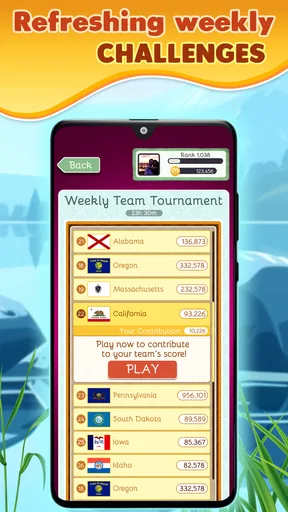
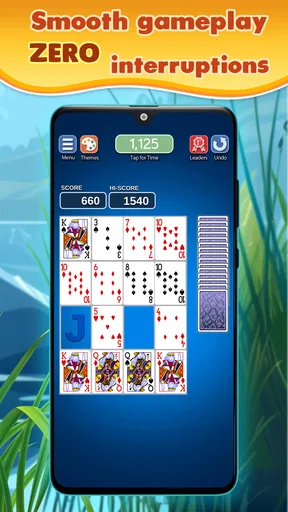
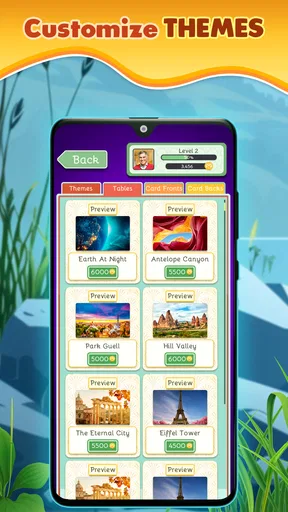
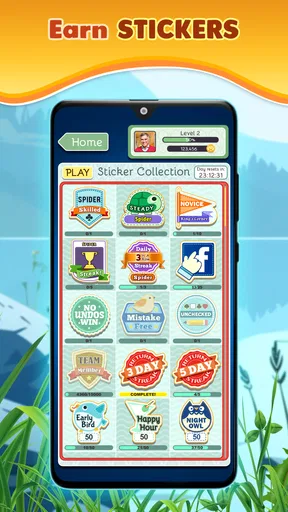
Our Review of Solitaire Deluxe® 2: Card Game
 Analysis by Appyee
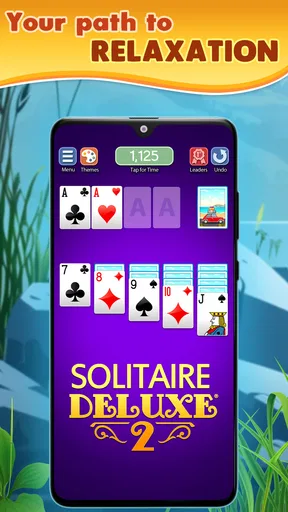
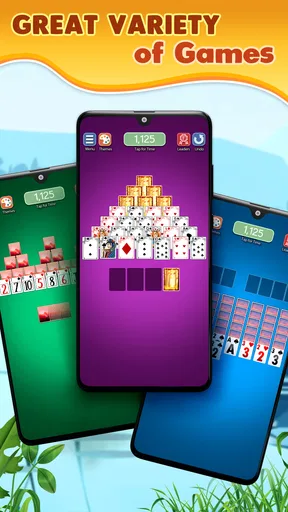
I approached Solitaire Deluxe® 2 as the kind of card game I could open without preparing for a long session. It is a free card game from Murka Games Limited, built around a broad collection of solitaire variations rather than one single ruleset. The appeal is simple: when I have a few quiet minutes, I can choose a familiar layout such as Klondike or try something different like Spider, Freecell, or Pyramid.
That variety makes it more useful than a basic solitaire clone, but it also changes what I expect from it. This is not a competitive card battler, a story-driven game, or a social experience. Its best quality is the ability to provide calm, self-contained puzzles with very little learning overhead. I found it especially comfortable for short breaks, winding down before bed, or filling a wait without committing to a match against another person.
What the first session feels like
The game has been available since March 3, 2015, and its long presence is easy to understand once I play it. Solitaire is already familiar to many people, so the main challenge is not learning the basic idea. It is finding the variation that matches my mood. Klondike feels like the obvious starting point, while Freecell rewards more deliberate planning and Spider asks me to think about sequences and empty spaces.
The collection includes more than twenty solitaire games, which gives the app a wider range than the usual single-mode alternative. I would not describe every variation as equally suitable for a beginner, though. A new player can recognize the cards immediately but still feel lost when the rules change the way cards may be moved. That is why I recommend starting with the most familiar layout instead of opening the app and choosing randomly.
The age rating is Everyone, which fits the straightforward card gameplay. There is no need to understand a fictional world, manage a complicated deck-building system, or react quickly to opponents. I can pause mentally whenever I need to. That said, the relaxed presentation should not be confused with effortless play: some deals require careful choices, and a careless move can make a promising board much harder to finish.
The game has an average rating of 4.3 from roughly forty-five thousand ratings, and it has passed five million installs. Those figures suggest that it has found a dependable audience, but they do not remove the need to judge whether its style suits me. A large solitaire collection is valuable only if I enjoy switching between formats; someone who wants a single, highly polished traditional mode may prefer a simpler app.
Choosing a comfortable starting point
For my first meaningful session, I would select Klondike. It is the version most people associate with computer solitaire, so the goal is easy to understand: uncover hidden cards, build the foundations by suit, and arrange the tableau in descending alternating colors. I can focus on the app’s controls rather than spending the first few minutes decoding unfamiliar rules.
Freecell is the next mode I would try once Klondike feels natural. Its open information changes the character of the puzzle. Instead of wondering which hidden card might appear, I can see more of the available cards and plan around temporary spaces. That makes it a good choice when I want a more thoughtful session and less luck-driven uncertainty.
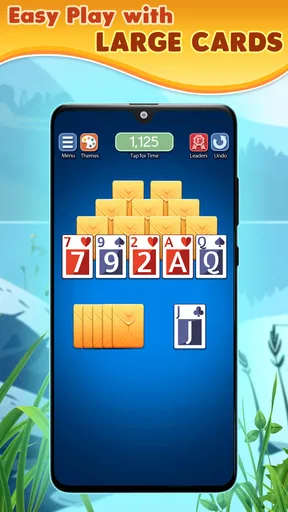
Spider and Pyramid offer different kinds of friction. Spider is about building and managing sequences, so moving a group too early can limit later options. Pyramid is more immediate because matching cards to remove them creates a different rhythm. I would treat these as separate puzzles rather than expecting the same habits to work everywhere. That small change in mindset prevents a lot of unnecessary frustration.
One useful approach is to keep the first session narrow. I would play a few rounds in one familiar mode before exploring the larger collection. Switching constantly can make the app feel like a menu of rules instead of a game. Once I know which style I enjoy, the variety becomes a strength rather than a distraction.
Getting from installation to the first win
The current version is 4.84.0, and the game runs on devices using Android 6.0 or later. After installing, I would avoid trying to master the entire collection immediately. I would open a standard Klondike deal, scan the tableau, and look for moves that reveal a face-down card. Revealing hidden information is usually more valuable than making a move that merely rearranges cards.
My first practical rule is to avoid emptying a column just because the space is available. An empty tableau column can be useful, but only if I have a suitable king or sequence ready to occupy it. Creating the space too early can leave the board awkwardly divided and remove a place where a long sequence could later be stored.
My second rule is to think about the stock before spending every available move. If several cards are playable, I try to choose the move that exposes the most options. A move that uncovers a hidden card or opens a useful color sequence generally gives me more information than one that simply sends a card to a foundation.
That is the first success I look for: not just completing a deal, but recognizing why a move improved the position. When I reveal a hidden card, preserve a useful empty column, and avoid blocking a needed color, I feel that the game is teaching me its logic. The eventual win then feels earned rather than accidental.
For a short everyday example, imagine waiting for an appointment with only ten minutes available. I would choose Klondike, make the obvious safe moves, and stop if the deal begins demanding extended calculation. For a longer evening session, I might move to Freecell or Spider, where planning several moves ahead feels more rewarding. The same app works in both situations because the modes have different levels of mental commitment.
Where new players commonly hesitate
The biggest source of confusion is assuming that all solitaire modes use the same movement rules. They do not. A sequence that feels sensible in Klondike may be unhelpful in Spider, and the visible layout in Freecell encourages a different type of planning. Before judging a mode as difficult, I would spend a few rounds learning what the game considers a productive move.
Another common mistake is treating the foundation piles as the only sign of progress. Moving cards upward can look satisfying, but it is not always the best immediate choice. Sometimes I need to keep a card in the tableau because it helps alternate colors, frees a hidden card, or preserves the ability to build a longer sequence. The best move is often the one that improves future access, not the one that produces the most visible progress.
I also recommend slowing down when several cards appear movable. Touch-based controls are convenient, but convenience can encourage impulsive taps. I try to pause and inspect the destination before committing. This matters most when a move could place a card on top of another sequence and hide the card I actually need next.
When a deal seems stuck, I do not immediately conclude that the app is unfair. Solitaire naturally includes positions where an earlier decision has narrowed the available options. I review the last few moves and look for a point where I used an empty column, stock card, or foundation placement too quickly. If the position remains unproductive, starting a new deal is often more sensible than forcing a bad line.
The interface may also feel busier than a minimalist solitaire app because the whole point is to offer many games in one place. I see that as a trade-off. A single-mode alternative can get me into a round faster, while this collection gives me more reasons to return after I have grown tired of one format. First-time users should expect a little browsing before settling into a favorite.
How the wider collection changes the experience
The strongest feature is not any individual variation; it is the way the collection supports different levels of attention. Klondike is familiar enough for casual play. Freecell gives me more information and therefore more responsibility. Spider asks me to manage sequences carefully. Pyramid provides a faster matching-oriented change of pace. Together, they make the app feel less disposable than a basic solitaire game.
I find that useful when my energy changes during the day. If I want something nearly automatic, I choose a familiar format and play without trying to optimize every move. If I want to concentrate, I select a mode where planning matters more. This is a more meaningful benefit than simply counting the available games: the app can serve as both a light distraction and a small logic exercise.
There is also a practical learning loop. I can use Klondike to become comfortable with moving cards and recognizing blocked positions, then carry that awareness into Spider or Freecell. The rules are different, but the broader habits transfer: protect flexibility, reveal information, and avoid spending a useful space without a reason.
Still, variety can become excess. If I only want classic Klondike with no interest in alternatives, the additional modes do not automatically improve my experience. I may spend time browsing rather than playing, and the larger package can feel less focused than a dedicated traditional solitaire app. The collection is best for people who genuinely want options.
What the free model means in everyday use
The game is free to download and play, with in-app purchases ranging from $0.99 to $49.99 per item. That makes the initial commitment easy, especially for someone who wants to test several solitaire styles before deciding whether the app deserves a permanent place on the phone. I would begin with the free experience and pay attention to how often the app interrupts my preferred rhythm before considering any purchase.
For me, the important question is not simply whether optional spending exists. It is whether I can enjoy a complete short session without feeling pushed toward a purchase. A free card game works best when I can open it for a quick round, make progress, and leave naturally. If a player is sensitive to promotional prompts or wants a completely stripped-down interface, a paid, minimalist alternative may feel more comfortable.
I would also avoid spending impulsively just because a difficult deal has gone badly. Solitaire rewards patience, and buying something in response to frustration can undermine the calm quality that makes the game appealing. I prefer to treat any optional purchase as a deliberate choice after I have established that I enjoy the collection itself.
Who will enjoy it, and who should pass
I would recommend this game to someone who likes card puzzles but wants more than one familiar layout. It suits players who enjoy self-paced sessions, do not need competition, and appreciate having an easy mode for a short break alongside more demanding formats. It is also a sensible choice for a first-time solitaire player because Klondike provides a recognizable entry point before the wider collection becomes relevant.
It is less suitable for someone looking for online opponents, a narrative campaign, or fast action. Nothing about the core appeal depends on reflexes or social interaction. A player who needs constant novelty may also find the basic card-solving loop repetitive, even with multiple variations. In that case, a broader puzzle game or a competitive card title would offer more dramatic change from one session to the next.
I would hesitate to choose it for a person who wants a very clean, single-purpose solitaire tool. The collection is the reason to install it, but that same breadth can add visual and navigational weight. Likewise, anyone who dislikes in-app purchase systems should compare the free experience with a paid alternative before settling in.
My practical routine after the first few games
After learning the basics, I would create a simple rotation instead of playing every mode at random. I might use Klondike for quick breaks, Freecell when I want visible information and careful planning, and Spider when I have enough time to manage longer sequences. Pyramid would be my choice when I want a different pace and a more immediate card-matching objective.
I would also judge my performance by decision quality rather than wins alone. Did I reveal a hidden card? Did I preserve an empty column for a useful moment? Did I avoid building a sequence that blocked the only card I needed? These questions make the game more rewarding and help me improve across modes without turning a relaxing pastime into a chore.
One subtle advantage of this routine is that it prevents a single unlucky deal from defining my opinion. If Klondike feels frustrating one day, I can switch to Freecell and enjoy a board with more visible information. If I want less analysis, I can return to a familiar layout. The app’s value comes from that flexibility, not from expecting every mode to feel identical.
Because the game is free and rated for Everyone, I see it as an easy recommendation for casual card-game fans who want a broad starting point. I would simply set expectations correctly: it is a collection for quiet, individual play, not a substitute for a multiplayer card room or a heavily guided tutorial game.
After spending time with it, my opinion is positive but specific. Murka Games Limited has made a useful home for several recognizable solitaire formats, and the range gives me a reason to return when one style becomes familiar. The main friction comes from the same source as the main strength: more choices can mean more browsing, and the free model may not appeal to players seeking a completely minimal experience.
My recommendation is to start with Klondike, learn to value moves that reveal information, and only then explore the less familiar tables. That path makes the first successful session reassuring instead of confusing. If I want calm card puzzles, flexible session lengths, and enough variety to keep the traditional formula fresh, this is a strong fit. If I want competition, story, or a single uncluttered mode, I would look elsewhere.
Privacy and Permissions
See what permissions an app requests and how it handles your data.
- Phone
- read phone status and identity
- Wi-Fi connection information
- view Wi-Fi connections
- Device ID & call information
- read phone status and identity
- Other
- view network connections, full network access, control vibration, prevent device from sleeping, Google Play license check
Verdict
Strengths of Solitaire Deluxe® 2: Card Game
- Smooth, responsive controls make dragging and placing cards feel natural.
- Daily challenges provide a simple reason to return and keep playing.
- Helpful hints can guide beginners when they get stuck.
- Multiple solitaire variations offer more variety than standard Klondike.
- Offline play makes it convenient for travel or areas with limited connectivity.
Limitations of Solitaire Deluxe® 2: Card Game
- Frequent ads may interrupt the game, especially between rounds.
- Some advanced features and content may require in-app purchases.
- The interface can feel dated compared with newer card-game apps.
- Difficulty balance varies noticeably between different game modes.
- Progress and settings may not transfer easily between devices.
Other Releases by Murka Games Limited
View All

Spider Solitaire Deluxe® 2
Card3.7
Similar Picks in This Category
View All
Solitaire - Classic Card Games
MobilityWare4.6

UNO!™
Mattel163 Limited4.3

Spider Solitaire: Card Games
MobilityWare4.6

Solitaire.com - Classic Cards
Tripledot Studios Limited4.7

Plants vs. Zombies™ Heroes
ELECTRONIC ARTS4.1

Hearthstone
Blizzard Entertainment, Inc.4.1
Frequently Asked Questions
What is Solitaire Deluxe® 2: Card Game?
Solitaire Deluxe® 2 is a mobile card-game collection centered on classic solitaire, also known as Klondike, along with several additional solitaire variations. It is designed for casual play, offering different layouts, challenges, card designs, backgrounds, and progression features. The app is suitable for short sessions, whether you want to relax for a few minutes or spend longer completing multiple deals.
Is Solitaire Deluxe® 2 free to download and play?
The game can generally be downloaded for free, but availability of specific features may depend on the version installed and the platform’s current policies. Free play may include advertising, optional purchases, or access limits for certain content. Before downloading, check the Google Play Store or Apple App Store listing for the latest information about in-app purchases, subscriptions, advertisements, and any premium edition offered.
Does Solitaire Deluxe® 2 work without an internet connection?
Many solitaire games are designed to be playable offline, and Solitaire Deluxe® 2 can be useful when you want a card game during travel or when your connection is unreliable. However, some functions may require internet access, including advertisements, store content, updates, account-related services, leaderboards, or cloud synchronization. It is best to launch the game online first and test which features remain available offline.
What solitaire modes and customization options are included?
Solitaire Deluxe® 2 focuses on variety rather than offering only one standard deal. Depending on the installed release, you may find classic Klondike and other solitaire-style games, along with daily challenges, statistics, achievements, alternate card faces, table backgrounds, and selectable difficulty settings. The exact selection can differ between Android and iOS versions, so review the current store description for the complete feature list.
Is Solitaire Deluxe® 2 suitable for beginners and casual players?
Yes. The game is generally approachable for beginners because the core rules are familiar, rounds are easy to start, and the interface is built around tapping or dragging cards into position. At the same time, experienced players can look for faster completions, higher scores, challenge goals, and more difficult layouts. New players should explore the settings and help information first, especially when trying unfamiliar solitaire variants.
Play our best games!


